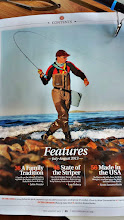
Back in 1993, I was home in Serbia for the entire summer. I had just bought a new Sage rod at Stoddard's in Boston and wanted to try it on some larger trout. So I decided to go with my father to the Mlava River in eastern Serbia, camp on its banks, and fish it for a couple of days.
We reached it by traveling along an old road full of incredible potholes, as so many village roads were back then. Our Peugeot wrestled with them valiantly. We arrived at Trška Crkva, an ancient church whose history reaches back to the early Christian era. Near the bridge, at the edge of a large meadow beneath a magnificent tree, we pitched our tent. As soon as everything was set up, we headed straight for the river.
I entered Mlava's magical tunnels.
The Mlava is a legendary karst river in eastern Serbia. Known for its picturesque meanders and gentle flow in its upper reaches, it also holds deep pools that have long been famous for producing trophy brown trout.

My father walked along the bank while I fished, although I could rarely see him because I was enclosed within a tunnel of overhanging trees. Every now and then I would call out, holding up another beautiful brown trout. He would peek through an opening in the branches, smile, and make his way over to photograph the fish before I released it.
Later, after a quick snack, we moved to a majestic wide pool. Towering willows shaded one bank while the river divided around a tiny island. I carefully climbed down the steep bank, where several kingfisher nesting holes were clearly visible in the exposed earth. Crossing the smaller channel, I stepped onto the little island, which gave me a perfect casting position to fish both currents.
The trout were rising everywhere.
March Browns filled the air, mixed with smaller Pale Watery duns and a scattering of caddisflies. It was a wonderfully complex hatch.
I began with a Thorax March Brown, and the trout took it eagerly. As darkness settled over the valley, I switched to a wine-colored Comparadun, which the fish accepted as an Ecdyonurus spinner. My final trout of the evening came almost in complete darkness.
We returned to our tent tired, happy, and ready to crawl into our sleeping bags.
The next morning I was on the river early, although the fishing started slowly. Once the sun climbed above the hills, I landed several smaller trout on a Goddard Caddis in the well-known Horseshoe Pool.
Later I walked back to the tent to pick up my lighter rod.
My father was talking with an elderly shepherd woman whose cows grazed in the meadow not far from our campsite.
Before joining them, I stopped beside a fallen tree where a single trout was rising—tiny, steady dimples. I cast a CDC Caddis Pupa, and the fish took it immediately. Unfortunately, I lost it almost at once when it dove straight into the submerged roots.
Disappointed, I walked toward my father and the old woman.
She wore heavy traditional wool clothing, a scarf tied over her hair, and carried a shepherd's staff.
My father introduced us.
"She is from the nearby village," he said. "We were just talking about her daughter. She fell in love with a young man, married in another village, and rarely comes to visit."
Then he turned to her.
"This is my son. Can you imagine how his mother feels knowing that he lives in America now? He may never come back to live with us. He's a musician, finishing university there. He may stay in America for good. Across the world. And you're sad because your daughter rarely visits, even though she lives only a few kilometers away. Imagine how his mother feels, with her only son living on the other side of the world."
The old woman looked at me with deep sadness in her eyes.
"My son," she said quietly, "aren't you sorry for your old mother? How can you leave her and go to America? Her heart will break in two. Why are you doing this, dear boy?"
I was stunned.
I knew she was right in many ways, yet I had never truly allowed myself to think about it. It was not her words alone that affected me, but the sorrow in her voice as it echoed across the river valley.
I felt uncomfortable, confused, and deeply sad.
I knew my life was about to change forever.
In Serbian culture, the bond between parents and children runs very deep. I honestly cannot remember what I answered her. During our conversation, my father quietly picked up his video camera and recorded part of it.
Many years later, after the COVID pandemic had nearly ended, my father and I returned to that same place.
It had changed a great deal. The beautiful old tree was gone, and we barely recognized the meadow.
As I stood beside the bridge putting on my waders, my father looked toward the meadow and said softly,
"The old woman is gone now... many years already."
After a pause he added,
"I wish I could find her daughter and give her the video recording of her mother."